Interior vs Exterior Waterproofing for Edmonton Homes
Interior vs Exterior Waterproofing Edmonton is an important consideration for homeowners dealing with basement moisture, leaks, and foundation water issues. Both interior and exterior waterproofing methods can help protect your home, but each solution works differently depending on the source of water intrusion and the condition of your foundation.
One of the most common questions we hear from Edmonton homeowners is:
“Should I choose interior waterproofing or exterior waterproofing?”
The answer isn’t always straightforward. The right solution depends on where the water is coming from, how severe the problem is, the age of your home, and the condition of your foundation. At Abarent Construction, we specialize in Interior vs Exterior Waterproofing Edmonton solutions, helping homeowners identify the real cause of basement water issues and apply long-lasting waterproofing systems that protect their homes from future damage.
In this guide, we’ll break down the differences between interior and exterior waterproofing in simple terms so you can confidently choose the right solution for your home.
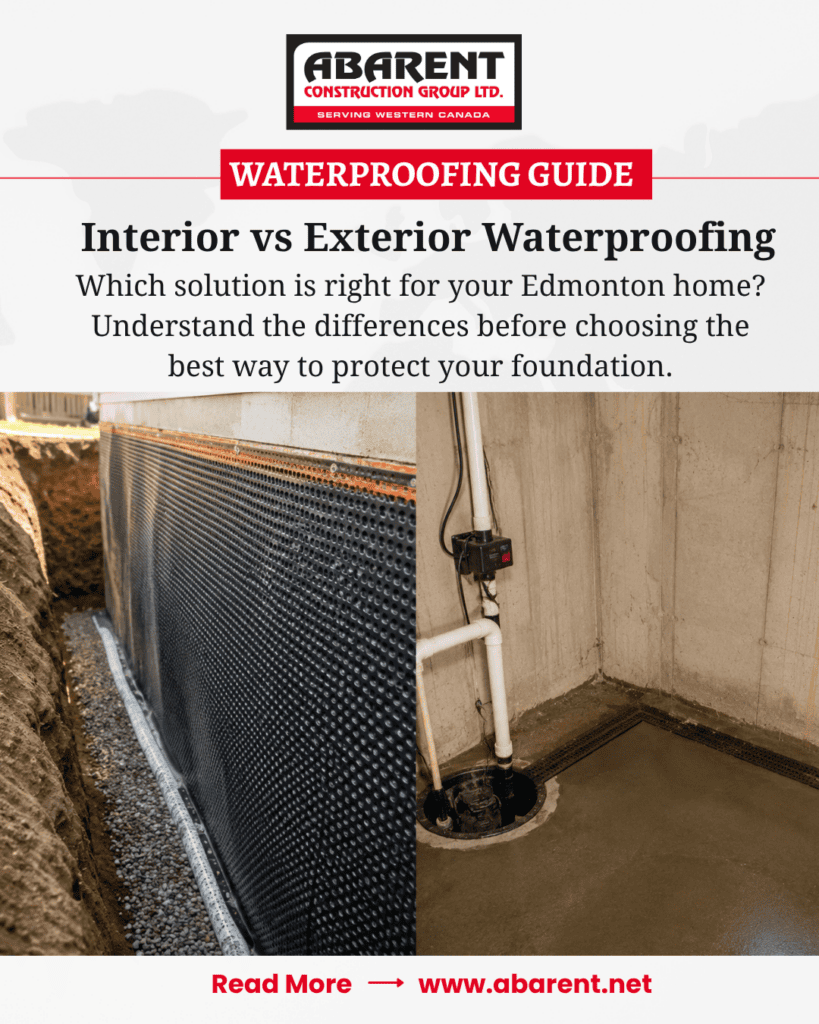
Interior vs Exterior Waterproofing Edmonton: Which Option Is Right for Your Home?
Waterproofing your basement is one of the most important steps in protecting your home’s foundation. In areas like Edmonton, where clay soil and heavy rainfall can create serious drainage issues, choosing the right waterproofing method is critical.
Homeowners often come across two main options: interior waterproofing and exterior waterproofing. While both are used to manage water problems, they are very different in how they work and in the level of protection they provide.
What Is Interior Waterproofing?
Interior waterproofing does not stop water from entering your foundation. Instead, it manages water after it has already entered your basement.
This system typically involves:
- Installing a drainage channel along the interior perimeter of the basement
- Allowing water to pass through the foundation wall
- Collecting that water through a drainage system (often called an interior weeping tile)
- Directing it into a sump pit
- Pumping it away from the home using a sump pump
Key Reality of Interior Waterproofing
Interior systems are water management solutions, not true waterproofing solutions. They deal with the symptoms (water inside), not the root cause (water outside the foundation).
Because water is still entering the structure:
- The foundation wall remains exposed to moisture
- Long-term structural risks can still exist
- Hydrostatic pressure is not relieved from the outside
What Is Exterior Waterproofing?
Exterior waterproofing is designed to stop water before it enters your home, making it the most complete and long-term solution.
This method involves:
- Excavating the soil around the foundation
- Cleaning and repairing the foundation walls
- Applying a waterproof membrane to the exterior surface
- Installing a proper drainage system (weeping tile)
- Backfilling with gravel to improve drainage
Why Exterior Waterproofing Is More Effective
Exterior waterproofing:
- Prevents water from entering the foundation at all
- Reduces hydrostatic pressure against the walls
- Protects the structural integrity of your home
- Keeps basement walls dry from the outside
Interior vs Exterior Waterproofing: Key Differences
|
Feature |
Interior Waterproofing |
Exterior Waterproofing |
|
Water Entry |
Water enters the foundation | Water is blocked outside |
|
Function |
Manages water inside |
Prevents water intrusion |
|
Structural Protection |
Limited |
Strong, long-term protection |
|
Hydrostatic Pressure |
Not relieved |
Relieved at the source |
| Long-Term Solution |
Temporary / partial |
Permanent / comprehensive |
Which Option Is Right for Your Home?
Interior waterproofing may be used in certain situations where exterior access is limited or as a short-term measure. However, it should not be considered a complete solution for ongoing water intrusion.
For homeowners dealing with:
- Persistent leaks
- Foundation cracks
- High groundwater pressure
- Poor exterior drainage
Exterior waterproofing is the more reliable and long-term solution.
Signs Your Basement May Need Waterproofing
Watch for these warning signs:
- Damp basement walls
- White powder (efflorescence) on concrete
- Water stains
- Musty smells
- Mold growth
- Cracks in foundation walls
- Standing water after rain
- Peeling paint
- Warped flooring
- High basement humidity
Even one of these signs may indicate a developing waterproofing issue. Addressing the problem early can help prevent costly foundation damage and protect your Edmonton home.
Why Interior vs Exterior Waterproofing Edmonton Requires Professional Inspection
Many homeowners assume every basement leak is caused by foundation cracks.
In reality, water problems may be caused by:
- Clogged weeping tile
- Poor grading
- Blocked drainage systems
- Window wells
- Improper downspouts
- Sump pump failure
- Foundation movement
Installing the wrong waterproofing system can waste thousands of dollars without solving the problem.
That’s why a proper inspection is always the first step.
How Abarent Construction Helps Edmonton Homeowners
At Abarent Construction, we believe every waterproofing project begins with understanding the real cause of the problem—not just treating the symptoms.
Our experienced team carefully inspects your basement, foundation, drainage system, and surrounding property to recommend the solution that best fits your home. Whether it’s an interior drainage system, exterior foundation waterproofing, crack repair, or a complete waterproofing upgrade, we focus on delivering reliable, long-lasting protection.
We take the time to explain the process in clear, straightforward language, so you know exactly what work is needed and why. Our goal is to help Edmonton homeowners protect their investment with solutions that stand the test of time.
Many of these issues are closely related to drainage and runoff problems.
Learn more here: Rainwater Problems Edmonton Homeowners Should Know About
Tips to Help Prevent Basement Water Problems
While professional waterproofing is the most effective solution for existing leaks, these maintenance tips can help reduce the risk of water damage:
- Keep gutters clean and free of debris.
- Extend downspouts several feet away from your foundation.
- Ensure the ground slopes away from your home.
- Check your basement regularly for signs of moisture.
- Repair small foundation cracks before they grow.
- Test your sump pump before the rainy season.
- Schedule foundation inspections if you notice recurring dampness.
Preventive maintenance can go a long way in protecting your home and reducing future repair costs. Small issues like poor drainage, clogged gutters, or minor foundation leaks can quickly become expensive problems if ignored. Learn more about the potential costs of delaying repairs in our guide: $500 Fix vs $15K Repair: Cost of Ignoring Spring Water Issues.
Final Thoughts
Choosing the right waterproofing method can make a significant difference in the long-term health of your home. While interior systems can help manage water temporarily, they do not stop moisture from affecting your foundation.
Exterior waterproofing provides a more permanent solution by addressing the issue at its source—keeping water out before it becomes a problem. If you’re experiencing basement moisture or water intrusion, it’s important to assess the root cause and choose a solution that protects your home for the long run.
Frequently Asked Questions (FAQs)
1. Which waterproofing method lasts longer?
Exterior waterproofing offers the most long-lasting protection because it prevents water from reaching the foundation walls in the first place. It addresses the problem at its source and helps protect the structure over time.
2. How do I know which waterproofing system my home needs?
A professional inspection is the best way to identify the source of water intrusion. In most cases, exterior waterproofing is recommended for long-term protection, especially when water is entering through the foundation.
3. Can waterproofing increase my home’s value?
Yes. A dry and properly protected basement can improve buyer confidence, reduce the risk of future repairs, and contribute positively to your home’s overall value.
4. What are the warning signs that I need waterproofing?
Common signs include:
- Water stains
- Musty odors
- Mold growth
- Damp walls
- Basement leaks
- Foundation cracks
- Peeling paint
- Standing water after rainfall
5. Does Abarent Construction provide waterproofing inspections in Edmonton?
Yes. Abarent Construction provides professional basement and foundation waterproofing inspections in Edmonton to identify the source of water intrusion and recommend the most effective long-term solution.
Schedule Your Free Basement Waterproofing Inspection
Not sure whether interior or exterior waterproofing is the right solution for your home? Let the experts at Abarent Construction help. We’ll inspect your basement, foundation, drainage system, and identify the source of the problem before recommending the best long-term waterproofing solution.
Call us today at +1 780-448-2592 or visit www.abarent.net to schedule your free basement waterproofing inspection in Edmonton.
Stay connected with Abarent Construction for expert tips, project updates, and waterproofing advice:
LinkedIn | Pinterest | Facebook | YouTube | Instagram
Don’t let a small basement leak become a major foundation problem. Protect your home with trusted waterproofing solutions from Abarent Construction and enjoy a dry, healthy basement for years to come.