News: Ask About Our Lifetime Warranty.

04/27/26

Posted by: Welcome

No Water in My Basement Doesn’t Mean Your Foundation Is Safe

Many homeowners assume that a dry basement means their foundation is healthy—but that’s not always true. 

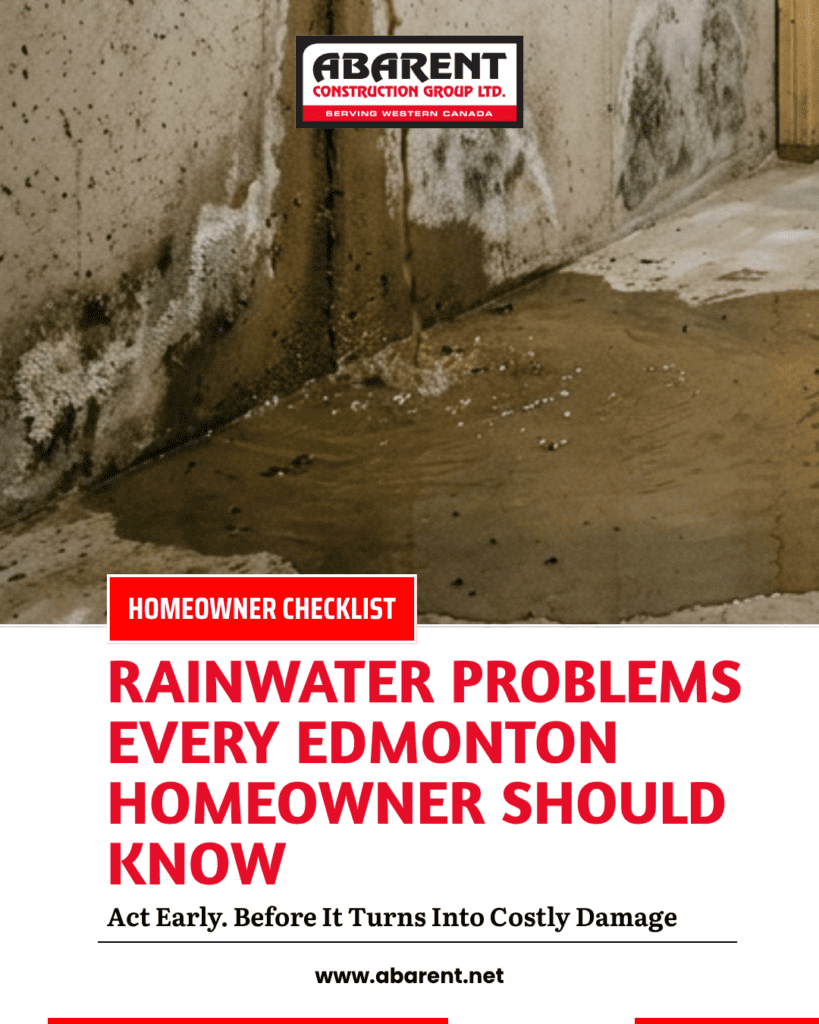
Even without visible water, hidden foundation risks like soil shifting, hydrostatic pressure, and poor drainage can silently compromise your home’s structure. Ignoring these issues can lead to costly repairs and long-term damage.

Hidden foundation risks in basement despite no visible water damage

Why a Dry Basement Can Be Misleading

A basement that stays dry during rain or snowmelt may give a false sense of security. Hidden forces like soil expansion and contraction or underground water pressure can weaken foundation walls over time.

Some homeowners only notice the problem after:

  • Cracks appear in walls or floors
  • Doors and windows begin to stick or misalign
  • Floors become uneven or sloped

By then, the repairs can be extensive—and expensive.

Common Hidden Foundation Problems

  • Soil Saturation – Alberta soil can absorb a lot of water during spring snowmelt or heavy rainfall. Even without water in the basement, this saturated soil puts pressure on foundation walls.
  • Poor Drainage – Gutters, downspouts, and landscaping that don’t properly divert water away from your home can silently undermine the foundation.
  • Hydrostatic Pressure – Water trapped in the soil creates pressure against walls, which can lead to cracks or bowing, even when your basement appears dry.
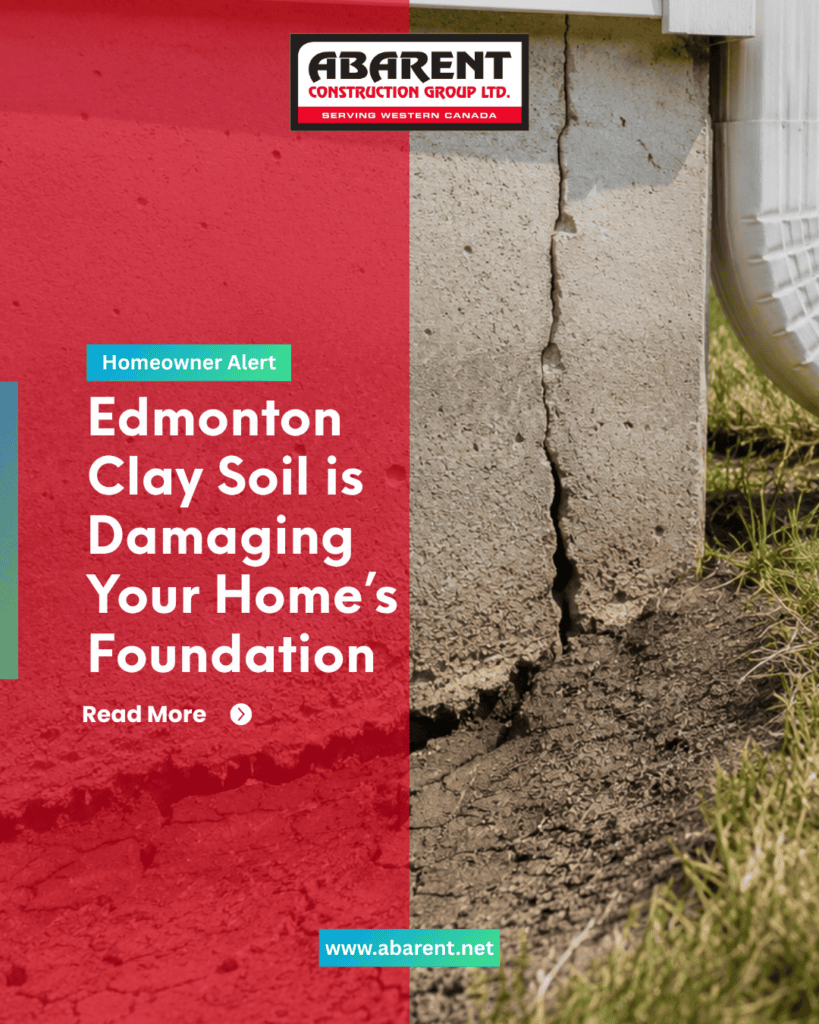
  • Expansive Clay Soil – Clay soil common in Alberta expands when wet and contracts when dry, causing subtle shifts that stress your foundation.

Signs Your Foundation Needs Attention

Even without water, watch for:

  • Cracks in walls, floors, or ceilings
  • Doors and windows sticking or misaligned frames
  • Uneven or sloping floors
  • Cracks in exterior masonry or bricks

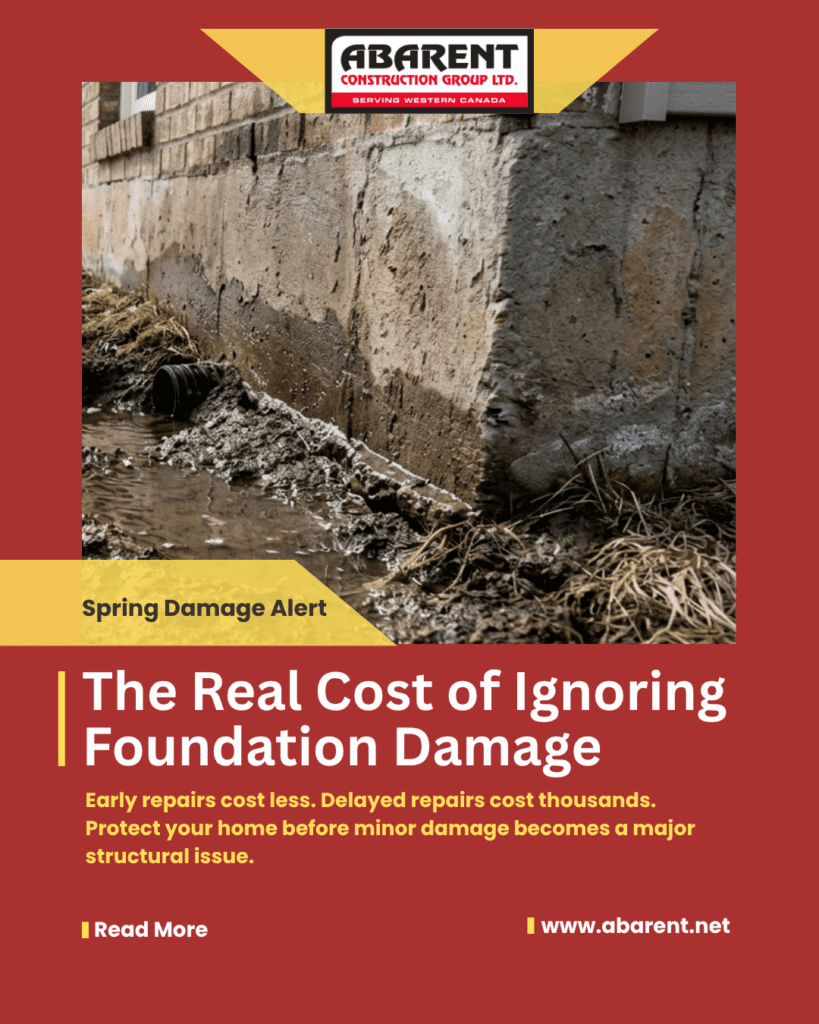
Early detection can save thousands in repair costs.

For more details on repair costs, see: Foundation Repair Cost in Alberta: 2026 Pricing & Value Guide

Proactive Steps to Protect Your Foundation

  • Check Drainage Systems – Ensure gutters, downspouts, and grading direct water away.
  • Monitor Soil Movement – Watch for landscaping and soil shifts after heavy precipitation.
  • Schedule Regular Inspections – Certified experts can detect hidden damage early.
  • Preventative Solutions – Installing weeping tiles, French drains, or sump pumps helps prevent hidden water damage.

Why Choose Professional Help

Even if your basement is dry, professional inspections are crucial. At Abarent Construction Group LTD, we use expert techniques to detect hidden foundation problems before they become emergencies. Our team ensures:

  • Accurate assessment of foundation health
  • Cost-effective solutions tailored to your home
  • Peace of mind knowing your foundation is safe

Frequently Asked Questions (FAQ’s) 

Q1: If my basement is dry, is my foundation safe?
No—hidden risks like soil pressure, drainage issues, and shifting soil can still cause damage.

Q2: What are early signs of foundation problems?
Cracks in walls/floors, sticking doors/windows, uneven floors, exterior masonry cracks.

Q3: How can I prevent foundation damage?
Maintain gutters, downspouts, and grading, and consider installing preventative drainage solutions.

Q4: How much does foundation repair cost in Alberta?
Costs vary depending on the issue. Check our 2026 guide for pricing and value.

Q5: Should I wait for water to appear before acting?
No. Early inspection and preventative action are the most cost-effective ways to protect your home.

Take Action Before It’s Too Late

Don’t wait for cracks or water to appear—protect your home’s foundation today. The sooner you act, the more money and stress you can save.

Schedule your professional foundation inspection now and safeguard your home from hidden foundation risks before it’s too late!

Call Abarent Construction Group LTD Today:

  • Edmonton: (780) 448‑2592
  • Vancouver: (604) 362‑0119

Learn more: www.abarent.net

Connect with us online for tips, updates, and expert advice:
LinkedIn | Pinterest | Facebook | YouTube | Instagram

Don’t wait—protect your home now!

04/15/26

Posted by: Welcome

Snowmelt Foundation Edmonton: Risks & Prevention Tips

Snowmelt foundation Edmonton is a serious seasonal concern for homeowners in the region.

Spring is a beautiful season — snow melts, flowers bloom, and temperatures rise.

But beneath that thawing snow lies a hidden danger that most homeowners never notice. As snow melts, water seeps deep into the soil around your home, creating conditions that can put your foundation at risk.

Understanding what happens underground is essential to preventing costly damage. These snowmelt foundation Edmonton risks may be invisible at first, but they can quickly lead to serious structural issues and expensive repairs if ignored.

Snowmelt foundation Edmonton water damage near basement wall

Snowmelt Foundation Problems in Edmonton

When snow melts, water doesn’t simply disappear. It infiltrates the soil around your foundation and saturates the ground. Depending on your property’s grading and drainage, this water can:

  • Pool near foundation walls
  • Increase soil pressure against basement walls
  • Enter cracks or weak points in the foundation

Even small amounts of water over time can weaken your foundation, leading to structural issues, mold growth, and basement flooding.

Why Homeowners Don’t See the Danger

Most homeowners notice problems only once damage has begun — like damp basements, hairline cracks, or water stains. Underground, however, the soil is shifting, expanding, and pressing constantly on your foundation. These risks are invisible but very real.

Causes of Snowmelt Foundation Edmonton Problems

  1. Hydrostatic Pressure Buildup: Saturated soil pushes against basement walls, causing cracks or bowing. Over time, this can compromise structural integrity.
  2. Soil Erosion: Moving water can wash away supporting soil around your foundation, destabilizing it.
  3. Water Infiltration: Minor cracks become entry points for water, leading to dampness, mold, and mildew.
  4. Ice Lens Formation: When water in cracks refreezes, it expands. This worsens structural damage and enlarges cracks.

Signs of Snowmelt Foundation Damage

  • Damp or musty basement
  • Hairline cracks in walls or floors
  • Efflorescence (white, powdery residue) on walls
  • Slight sinking or uneven flooring

Early detection can save thousands in repairs.

How to Prevent Snowmelt Foundation Issues in Edmonton

  1. Inspect and Clean Gutters & Downspouts: Ensure water flows away from your foundation.
  2. Check Grading Around Your Home:The soil should slope downhill, directing water away from walls.
  3. Schedule a Professional Foundation Inspection: Experts can identify underground risks before visible damage appears. For more guidance on preparing your home for inspections and protecting your foundation, check out our blog on 2026 Home Inspection: March Foundation Check Tips
  4. Install Drainage Solutions if Needed: French drains, weeping tiles, and sump pumps effectively divert water from your home.
    Explore our basement waterproofing and drainage solutions for long-term protection.

FAQs About Snowmelt Foundation Risks

Q1: What are snowmelt foundation risks?
A: Hidden threats from meltwater saturating soil around your foundation, increasing pressure and damage potential.

Q2: When is snowmelt most dangerous to foundations?
A: Early spring or rapid thaw cycles, when large amounts of water enter the soil quickly.

Q3: Can snowmelt really damage my basement walls?
A: Yes — excess water and pressure can cause cracks, leaks, and structural issues over time.

Q4: How can I prevent snowmelt foundation problems?
A: Proper grading, gutter maintenance, professional inspections, and installing drainage solutions help reduce risks.

Q5: When should I call a professional?
A: At the first sign of dampness, cracks, or after a heavy snowmelt season. Early detection saves thousands.

Don’t Wait Until It’s Too Late

Snowmelt foundation risks are hidden but preventable. Taking steps now can save thousands in repairs and protect your home’s structural integrity.

Call Abarent Construction Today
Edmonton: (780) 448‑2592
Vancouver: (604) 362‑0119
Learn more at www.abarent.net

Connect with Abarent Online:
[ LinkedIn ] [ Pinterest ] [ Facebook ] [ YouTube ] [Instagram

04/10/26

Posted by: Welcome

$20 Drainage Mistake That Can Cost $20,000 in Foundation Repairs

Spring is the season when your home’s foundation faces its toughest test, and spring drainage problems are often the hidden culprit. 

Snow melts, spring rains arrive, and if your drainage system isn’t working correctly, what starts as a small, $20 oversight can turn into tens of thousands of dollars in foundation repairs. 

Unfortunately, many homeowners make the same simple mistakes every year—only realizing the cost when it’s too late.

Spring drainage problems causing foundation damage around a residential home

Why a $20 Drainage Mistake Matters

At first glance, a clogged downspout, a misaligned gutter, or a small slope issue may seem harmless. But when spring rains and melting snow saturate the ground, water can pool around your foundation. Over time, this constant water pressure can cause serious damage, including:

  • Cracks in basement walls – water seeps into small crevices, widening cracks over time.
  • Foundation settling – uneven soil saturation can cause your foundation to sink or shift.
  • Structural damage – walls, floors, and framing can be compromised by excess moisture.
  • Mold and mildew growth – damp conditions encourage mold that affects indoor air quality and health.

A simple $20 drainage fix—like adding a downspout extension—can prevent all of these problems. Ignoring it can easily escalate into a $20,000 repair job.

For homeowners curious about the cost of fixing foundation issues caused by snowmelt, read our detailed guide here: Foundation Repair Cost in Alberta: 2026 Pricing & Value Guide — it explains what goes into professional estimates and why investing in quality repairs saves money in the long run.

Common Spring Drainage Mistakes Homeowners Make

Many homeowners don’t realize how small oversights can snowball into expensive repairs. Here are the most common mistakes we see in Edmonton and Vancouver:

  • Ignoring gutter extensions – Water falling directly at the base of your home saturates the soil and weakens your foundation. Even a few feet of redirected runoff can make a huge difference.
  • Blocked or clogged downspouts – Leaves, debris, and ice can block downspouts. Even a small clog can redirect water to the wrong place, creating pooling near your foundation.
  • Improper grading around your home – If soil slopes toward your house instead of away, water naturally flows to your foundation, increasing the risk of settling and cracks.
  • Skipping regular inspections – Many homeowners wait until damage is visible. A quick spring check can prevent long-term damage and save thousands.
  • DIY fixes without professional guidance – While some drainage fixes are easy, complex issues like persistent water pooling, weeping tile replacement, or sump pump installation require professional evaluation.

How to Protect Your Home This Spring

The best defense against costly foundation damage is a proactive drainage plan. Here’s what you can do:

  • Check gutters and downspouts: Make sure all water flows at least 5 feet away from your foundation. Repair leaks and clear clogs.
  • Inspect soil grading: Ensure the ground slopes away from your home, particularly near corners and low spots.
  • Schedule a professional inspection: Experts can detect hidden water risks, like soil saturation, foundation movement, or failing drainage systems, before it’s too late.
  • Install proper drainage solutions: Options like French drains, weeping tiles, and sump pumps effectively redirect water away from your foundation.
  • Maintain drainage year-round: Don’t wait until spring. Regular checks after heavy rain or snow ensure your system works when you need it most.

Real-Life Example

One homeowner in Edmonton ignored a clogged downspout that cost just $20 to fix. By the next spring, water had seeped under the foundation, causing significant settling. The repair? Over $18,000 for foundation stabilization and basement wall repairs. That $20 oversight ended up costing nearly $20,000—proof that small mistakes can have huge consequences.

Don’t Let a Small Mistake Cost You Big

A simple $20 drainage oversight can quickly turn into a $20,000 foundation repair. Taking a proactive approach, checking your drainage system, and calling our spring drainage solutions experts for drainage and foundation issues can save you money, stress, and future headaches.

FAQs: Spring Drainage & Foundation Protection

Q1: Can a small $20 drainage mistake really lead to major foundation damage?
Absolutely. Even a minor issue, like a clogged downspout or misdirected runoff, can cause water to pool around your foundation. Over time, this can result in cracks, settling, and costly repairs.

Q2: How often should I inspect my gutters and drainage system?
It’s best to inspect your gutters and drainage at the start of every season—especially spring and fall—and after heavy rains or snowmelt. Regular checks help prevent small problems from escalating.

Q3: What’s the best way to keep water away from my foundation?
Ensure gutters and downspouts direct water at least 5 feet from your home. Maintain proper soil grading, and consider professional solutions like French drains, weeping tiles, or sump pumps for more complex drainage issues.

Q4: Can I fix drainage problems myself?
Some minor tasks, like clearing leaves from gutters, can be DIY. However, larger issues like poor grading, persistent water pooling, or failing weeping tiles should be handled by professionals to prevent long-term foundation damage.

Q5: When should I call a professional?
Call a drainage or foundation expert if you notice water pooling near your foundation, basement leaks, wall cracks, or any signs of structural movement. Early intervention can save thousands in repair costs.

Call Abarent Construction Today

Protect your home before it’s too late. Our Edmonton and Vancouver teams specialize in foundation protection, drainage solutions, and weeping tile installation.

Edmonton: (780) 448-2592
Vancouver: (604) 362-0119
Learn more about spring drainage solutions: www.abarent.net

Connect with Abarent Online:
[ LinkedIn ] [ Pinterest ] [ Facebook ] [ YouTube ] [Instagram

04/07/26

Posted by: Welcome

Spring Drainage in Western Canada: Edmonton vs Vancouver Risks

Spring hits hard across Western Canada—but not in the same way everywhere.

When it comes to spring drainage in Western Canada, the challenges vary more than most homeowners expect. In Edmonton, we deal with rapid snowmelt and frozen ground. In Vancouver, it’s constant rain and saturated soil. Different conditions—but the result is often the same: water finding its way into your basement.

I’ve seen homeowners assume their house is fine just because they’ve never had water before. The reality? Spring is when hidden drainage issues show up fast—and get expensive just as quickly.

Spring Alert: Edmonton vs Vancouver Drainage Risks

Edmonton Homes: Fast Snowmelt = Sudden Pressure

In Edmonton, the ground stays frozen well into early spring. When temperatures rise, snow melts quickly—but the soil can’t absorb that water.

So where does it go? Straight toward your foundation. This creates hydrostatic pressure, forcing water through:

  • Foundation cracks
  • Basement walls
  • Window wells
  • Weak drainage systems

Common Edmonton Spring Problems:

  • Sudden basement seepage
  • Overflowing or failing weeping tile systems
  • Water pooling near foundation walls

Vancouver Homes: Constant Rain = Long-Term Saturation

In Vancouver, the issue isn’t sudden—it’s continuous exposure to moisture. The soil is already wet before spring begins, and ongoing rainfall keeps it that way.

Common Vancouver Spring Problems:

  • Slow leaks that go unnoticed
  • Persistent dampness in basements
  • Increased risk of mold and structural wear

The Hidden Problem Most Homeowners Don’t See

Water damage doesn’t start when you see water. It starts when:

  • Soil expands and contracts around your foundation
  • Drainage systems begin to clog or fail
  • Small cracks start forming from pressure

By the time water shows up inside, the problem has been building for months—or even years.

Where Does All That Water Actually Go?

During spring melt and rainfall, water moves in three main ways:

  1. Surface Flow – Water running across your yard toward your home
  2. Soil Saturation – Ground becomes overloaded and holds water
  3. Hydrostatic Pressure – Water pushes against your foundation walls

If your home doesn’t have proper drainage, all three work against you at the same time.

How to Protect Your Basement This Spring

  1. Keep Water Away from the Foundation
  • Maintain proper grading away from your home
  • Extend downspouts at least 5–6 feet
  1. Check Your Weeping Tile System
  • If it’s older than 20–25 years or frequently backs up, it may not be working properly
  1. Inspect Window Wells
  • Clear debris, check gravel, and ensure proper drainage
  1. Look for Early Warning Signs
  • Musty smells, small wall cracks, damp spots, or white efflorescence 

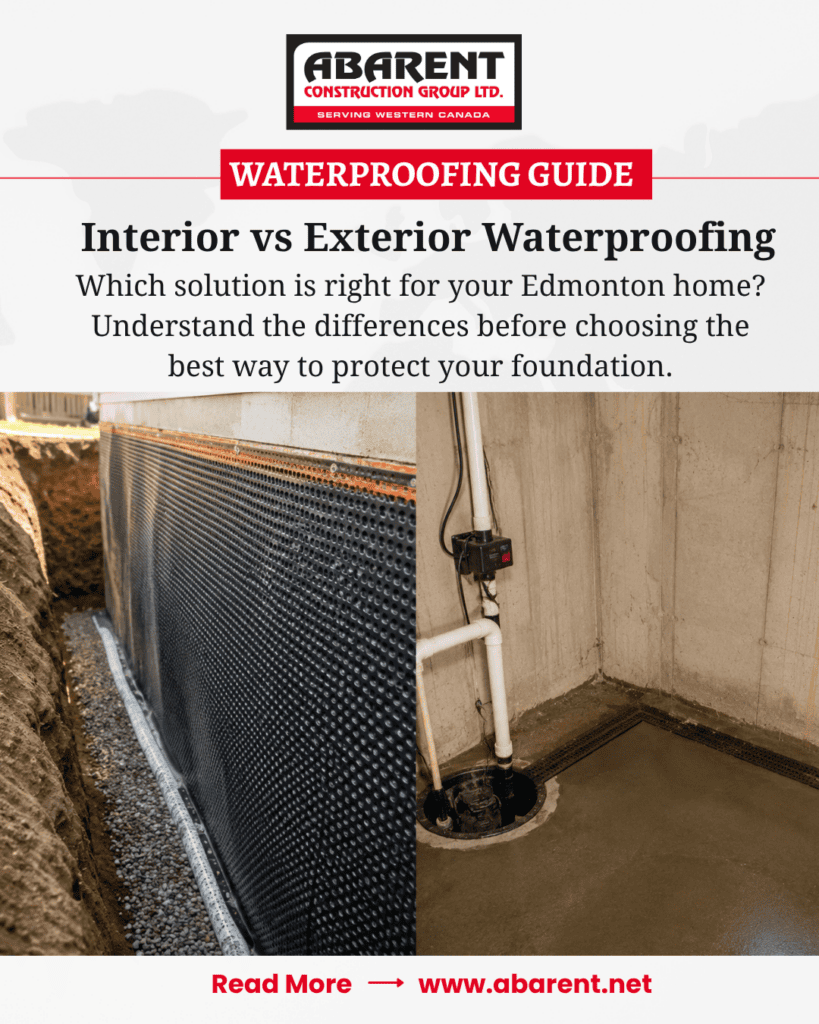
Interior vs Exterior Drainage

  • Exterior systems: Stop water before it reaches your foundation (long-term solution)
  • Interior systems: Manage water after it enters

For Western Canada homes, exterior drainage is critical for long-term protection.

When Should You Take Action?

If you notice:

  • Water near your foundation
  • Any signs of moisture inside
  • Recurring spring issues

Why ‘Wait and See’ Costs More This Spring? Spring water problems don’t fix themselves—they get worse with every thaw and rainfall.

Why Homeowners Across Western Canada Choose Abarent Construction

  • Experience with Edmonton’s freeze-thaw cycles and Vancouver’s constant rain
  • Solutions built for Canadian soil and climate
  • Focus on long-term foundation protection—not temporary fixes

Learn more about our foundation repair services to keep your home safe this spring.

Final Thoughts

Spring drainage in Western Canada isn’t just about weather—it’s about how your home handles water under pressure.

Whether you’re in Edmonton dealing with fast snowmelt or Vancouver facing constant rain, the risk is real.

The earlier you catch drainage issues, the more you save—simple as that.

FAQ: Quick Answers About Spring Drainage

Q1: What is spring drainage?
A: How water from snowmelt and rain moves away from your home to prevent leaks and foundation damage.

Q2: How do Edmonton and Vancouver drainage problems differ?
A: Edmonton faces rapid snowmelt; Vancouver deals with constant rain and saturated soil.

Q3: How can I prevent basement water this spring?
A: Keep grading away from your home, extend downspouts, inspect window wells, and check weeping tiles.

Q4: Interior or exterior drainage—what works best?
A: Exterior systems prevent water before it reaches your foundation; interior systems manage water after it enters.

Q5: When should I call a professional?
A: At the first signs of water, damp spots, musty smells, or recurring spring leaks.

Protect Your Home This Spring

Schedule a professional Foundation Inspection today and complete your Spring Foundation Checklist before the snow fully melts.

Get Directions for Edmonton and Vancouver 

Call Us: Edmonton: (780) 448-2592 | Vancouver: (604) 362-0119

Connect with Abarent Online:
[ LinkedIn ] [ Pinterest ] [ Facebook ] [ YouTube ] [Instagram

03/31/26

Posted by: Welcome

Why ‘Wait and See’ Costs More for Your Foundation This Spring

Every spring, many homeowners start noticing small warning signs around their homes — a hairline crack in the basement wall, a damp corner, or water pooling near the foundation after the snow melts.

The most common reaction is simple:
“Let’s wait and see if it gets worse.”

Unfortunately, when it comes to your home’s structure, waiting is often the most expensive strategy. Many spring foundation problems start small, but once moisture and soil pressure begin affecting the foundation, the damage can escalate quickly.

Across Canada, spring is one of the busiest seasons for Residential Foundation Repair because melting snow and shifting soil create conditions that expose weaknesses in foundations.

Professional contractor performing spring foundation repair on a Canadian home, preventing cracks and basement damage.

Why Spring Creates the Most Foundation Problems

Spring is when the ground begins to thaw after months of freezing temperatures. As the frozen soil melts, it releases large amounts of moisture into the ground surrounding your home.

This process can lead to several structural concerns:

  • Increased water pressure against foundation walls
  • Soil expansion and movement
  • Drainage systems becoming overloaded
  • Water entering basement cracks

These conditions are responsible for many of the spring foundation problems homeowners experience each year.

According to research from the National Research Council Canada, moisture movement and soil expansion are among the leading causes of foundation damage in cold climates.

Small Foundation Cracks Can Turn Into Big Repairs

Homeowners often ignore small warning signs because the damage appears minor at first. However, foundation issues tend to worsen over time, especially during spring when snowmelt increases moisture levels in the soil surrounding the home.

Catching these issues early makes a huge difference in repair cost and complexity.

Here are a few examples of how small foundation issues can turn into major structural problems if they are ignored:

Early Problem

What It Can Turn Into

Hairline crack

Structural wall crack

Minor leak

Basement flooding

Soil settlement

Foundation shifting

Poor drainage

Long-term structural damage

The difference between early repair and delayed repair can easily mean thousands of dollars in additional costs.

Addressing issues early with professional foundation cracks repair or foundation inspection services is far more affordable than dealing with major structural repairs later.

Why Spring Makes Foundation Damage Worse

Spring creates the perfect environment for foundation damage because several risk factors happen at the same time.

1. Snowmelt Increases Groundwater

Melting snow saturates the soil around your home. When the ground cannot absorb water fast enough, pressure builds against basement walls.

This pressure, known as hydrostatic pressure, is one of the leading causes of basement leaks and wall cracks. Over time, this pressure can force water through even the smallest foundation openings, leading to serious basement moisture problems.

2. Freeze–Thaw Cycles Expand Existing Cracks

During early spring, temperatures often move above and below freezing within the same week.

Water enters small cracks during the day and freezes overnight. When water freezes, it expands — forcing the crack wider each time the cycle repeats.

This is why small cracks that appear harmless in winter often require foundation cracks repair once spring arrives.

3. Poor Drainage Becomes More Obvious

Spring runoff quickly exposes drainage problems around a property. Common issues include:

  • Clogged weeping tiles
  • Improper grading around the home
  • Downspouts discharging too close to the foundation

When drainage problems remain unresolved, water continues to accumulate around the foundation year after year. In many cases, homeowners eventually need professional basement waterproofing services to prevent ongoing water damage.

The Real Cost of Waiting

Homeowners often delay repairs because they assume the problem is cosmetic.

However, foundation damage tends to progress quickly once water and soil movement are involved.

Typical repair cost differences often look like this:

Problem Early Repair Delayed Repair
Small crack repair $2,500 – $3,500 $10,000+ structural repair
Minor basement leak $2,500 – $3,500 $20,000+ waterproofing
Drainage issue $2,500 – $3,500 $35,000+ foundation stabilization

The biggest mistake homeowners make is assuming foundation problems will stop on their own. In reality, the opposite is usually true.

Understanding the typical foundation repair cost Canada homeowners face can help people make smarter decisions before the damage becomes severe.

Early Inspections Prevent Major Repairs

A professional inspection can identify issues long before they become serious structural problems.

Professional foundation inspection services typically check:

  • Foundation Wall Cracks
  • Basement Moisture Levels
  • Drainage Performance
  • Soil Grading Around The Property
  • Signs Of Settlement Or Structural Movement

For many homeowners, catching these problems early means the difference between a small maintenance repair and a major structural project.

If you want to better understand repair pricing, you can read our detailed guide:

Foundation Repair Cost in Alberta: 2026 Pricing & Value Guide

Preventative Maintenance Saves Thousands

Taking action before spring runoff peaks can dramatically reduce foundation risks.

Simple preventative steps homeowners can take include:

  • Cleaning gutters and extending downspouts
  • Improving yard grading around the home
  • Sealing minor foundation cracks
  • Installing proper drainage systems
  • Scheduling professional foundation inspections

These preventative measures help ensure water moves away from the foundation instead of toward it, protecting the long-term stability of the home.

When to Call a Foundation Professional

If you notice any of the following warning signs during spring, it is best not to wait:

  • New or expanding cracks in foundation walls
  • Water entering the basement after rain or snowmelt
  • Uneven floors or structural movement
  • Persistent basement humidity or mold smell
  • Pooling water around the home

These warning signs often indicate drainage or structural issues that require professional residential foundation repair.

At Abarent Construction Group LTD, our team specializes in:

Learn more about our services: https://www.abarent.net

Protect Your Home Before Spring Damage Gets Worse

Spring is the season when small foundation problems often become serious structural issues.

Waiting to “see what happens” might feel like the easiest option, but it often leads to larger repair bills and more extensive work later.

Addressing spring foundation problems early protects your home, your investment, and your peace of mind.

If you’ve noticed cracks, moisture, or drainage issues around your property, scheduling a professional inspection now can prevent costly repairs later in the season.

Call Us: Edmonton: (780) 448-2592 | Vancouver: (604) 362-0119

Connect with Abarent Online: [ LinkedIn ] [ Pinterest ] [ Facebook ] [ YouTube ] [Instagram

03/20/26

Posted by: Welcome

The 5-Foot Rule: Protect Your Foundation This March

Spring is approaching, and for many Canadian homeowners, that means snowmelt, soggy soil, and potential basement water issues. One simple habit can prevent expensive damage: the 5-Foot Rule foundation protection method.

By keeping snow at least five feet away from your foundation in March, you reduce the risk of water infiltration, basement moisture problems, and costly foundation repair in April. This simple step is especially important in regions with freeze-thaw cycles, where excess moisture can quickly lead to structural issues.

This guide explains why the 5 Foot Rule Foundation approach matters, how to implement it safely, and practical steps to protect your home this spring.

5 foot rule foundation snow removal around house

What Is the 5-Foot Rule?

The 5-Foot Rule is straightforward: remove snow and ice from within five feet of your home’s foundation.

Why it matters:

  • Melting snow saturates soil around your foundation, increasing hydrostatic pressure against basement walls.
  • Standing snow near walls can push water through small cracks, creating spring foundation problems.
  • Early snow management reduces the risk of foundation cracks repair and major basement waterproofing services later.

Think of it as giving your foundation “breathing room” so water can drain safely away from your home.

March: The Critical Month for Snow Removal

March is the ideal time to implement the 5-Foot Rule because:

  • The ground is partially frozen – Water cannot drain quickly, so early snow removal prevents water pooling.
  • Snow is still manageable – Piled snow is easier to move before it melts, freezes, or becomes ice.
  • Reduces freeze-thaw stress – Water seeping into cracks can freeze overnight, expanding and worsening damage.

By acting in March, you prevent minor issues from turning into expensive residential foundation repair projects in April.

Even a few inches of snow left near your home can lead to serious spring foundation problems and costly repairs.

How to Apply the 5-Foot Rule: Step-by-Step

  • Clear snow carefully – Use a shovel or snow blower to remove all snow within five feet of foundation walls.
  • Avoid piling snow against the house – Direct snow toward open areas or lawns to prevent runoff back toward the foundation.
  • Check downspouts and gutters – Ensure water is directed at least five feet away from your home.
  • Inspect for early cracks – Any small cracks can be addressed immediately with foundation cracks repair before spring melt.
  • Plan for drainage adjustments – If snow removal exposes grading issues, correct slopes to channel water away from the foundation.

March Action vs April Consequence

March Action

April Consequence If Ignored

Remove all snow within 5 feet of foundation Water pools near walls, saturating soil
Keep downspouts extended away from house Melted water flows toward basement
Inspect small cracks and seal them Minor cracks expand, requiring foundation cracks repair
Ensure grading slopes away from home Drainage issues worsen, may need basement waterproofing services
Clear walkways and driveways of ice dams Ice dams push water toward foundation walls

This table gives a practical visual guide homeowners can follow to prevent serious spring foundation problems.

Additional Snow Management Tips

  • Use non-corrosive ice melt products – Protect your foundation and concrete surfaces.
  • Avoid heavy piles of snow from driveways – Large piles near walls can create pressure and water infiltration.
  • Check surrounding landscaping – Ensure plants and mulch are not blocking water flow away from the foundation.
  • Schedule a professional inspection – Early inspections catch hidden issues and minimize repair costs.

For more details on repair costs and services: Foundation Repair Cost in Alberta: 2026 Pricing & Value Guide

When to Call a Professional

Even with the 5-Foot Rule, some issues require professional attention. Contact experts if you notice:

  • Water seeping into the basement after snowmelt
  • Cracks that are widening or uneven walls
  • Pooling water near foundation walls
  • Persistent basement moisture or mold smell

At Abarent Construction Group LTD, we specialize in:

  • Foundation crack repair
  • Basement waterproofing services
  • Drainage system improvements
  • Structural foundation repair
  • Professional foundation inspection services

Learn more about our services: https://www.abarent.net

Book a Spring Foundation Inspection Today

Frequently Asked Questions(FAQ’S)

What is the 5-Foot Rule for foundation protection?

The 5-Foot Rule means keeping snow and ice at least five feet away from your foundation to prevent water damage and basement leaks.

When should I start removing snow from around my foundation?

March is the ideal time, before snow begins to melt rapidly and cause water buildup.

Can snow near my foundation cause basement leaks?

Yes, snow near your foundation can lead to basement leaks. As snow melts, water saturates the soil around your home, increasing hydrostatic pressure against foundation walls. This pressure can force water through small cracks, joints, or porous concrete, leading to moisture problems, leaks, or even flooding. Keeping snow away helps reduce water buildup and protects your foundation.

How far should snow be from my house?

Snow should be kept at least five feet away from your foundation, following the 5-Foot Rule foundation protection method. This distance allows melting snow to drain safely away from your home, reducing the risk of water infiltration, soil saturation, and foundation damage.

Final Takeaway

The 5-Foot Rule is a simple, inexpensive preventative step that can save homeowners thousands of dollars. By clearing snow away from your foundation in March, you reduce the risk of spring foundation problems, basement flooding, and structural damage.

Don’t wait until April — early action is the best way to protect your home, your investment, and your peace of mind.

Call Us Today: Edmonton: (780) 448-2592 | Vancouver: (604) 362-0119 

Connect with Abarent Online: [ LinkedIn ] [ Pinterest ] [ Facebook ] [ YouTube ] [Instagram

03/18/26

Posted by: Welcome

Passing 2026 Home Inspection: March Foundation Check Tips

March Foundation Inspection is one of the most important steps homeowners can take as 2026 begins and winter loosens its grip across Western Canada. Many homeowners are gearing up for spring maintenance — but one of the most critical tasks that often gets overlooked is checking your foundation. While cleaning up your yard might be top of mind, preparing your foundation ahead of a 2026 home inspection can be the difference between passing with confidence or facing costly repairs.

March is a pivotal month because snow melt, freeze-thaw cycles, and shifting soil all place pressure on your home’s foundation. By scheduling a comprehensive foundation assessment now, you’re getting ahead of seasonal water movement that can worsen foundation performance and trigger inspection red flags.

Below, I’ll walk you through why this March check matters, what to look for, and how proactive service can help protect your investment.

March Foundation Check: Pass Your 2026 Home Inspection

Why a March Foundation Check Is Critical for 2026 Home Inspections

Winter doesn’t just disappear when the calendar flips — residual moisture and fluctuating temperatures remain a hidden threat. During March:

  • Snow begins melting rapidly, and the soil around your home may still be partially frozen, slowing drainage.
  • Hydrostatic pressure increases, forcing water toward your foundation walls and basement.
  • Early signs of foundation issues often start showing before most homeowners think to check.

A March foundation check gives you the opportunity to spot problems early, address them with professional services, and ensure your home inspection report is clean — saving you stress, time, and money.

What to Include in Your March Foundation Check

Here’s how I recommend preparing your home this March before the 2026 inspection season:

1. Inspect Foundation Walls for Early Cracks

Start with a walk around your exterior foundation walls. Small hairline cracks are common, but they can widen over time if left unchecked. These cracks may be a sign of soil movement or pressure buildup.

If you find visible cracks or widening, it’s best to consult professional foundation crack repair services — early intervention prevents structural issues during your home inspection.

2. Check for Interior Basement Moisture

Even minor basement moisture can affect your inspection outcome. Look for:

  • Damp walls or floors
  • Musty odors
  • Efflorescence (white residue on foundations)

These can indicate poor drainage or water seepage, often from winter runoff. Detecting them now gives you time to install or enhance basement waterproofing systems before your inspection.

3. Review Outdoor Drainage and Grading

Water needs somewhere to go — and a proper slope away from your home is essential.

Make sure grading around your foundation directs water downhill, not back toward it. This part of your March check helps prevent sitting water near your basement walls and reduces hydrostatic pressure against your foundation. 

4. Assess Weeping Tile and Drainage Systems

Older homes, especially, depend on underground systems like weeping tile to manage groundwater. These can clog over time with soil and debris.

Signs your drainage system may need service include:

  • Water pooling near your foundation
  • A constantly running sump pump
  • Damp basement walls during melt cycles

If these show up during your March foundation check, exploring professional cleaning or replacement now can protect your home long term.

5. Schedule a Professional Foundation Inspection

A professional foundation inspection goes deeper than what the eye can see. A licensed expert can assess:

  • Soil movement
  • Foundation settlement
  • Structural stability
  • Moisture pathways

This gives you a comprehensive understanding of your home’s performance before the 2026 inspection happens.

Related Services to Strengthen Your Foundation

Here at Abarent Construction Group LTD, we offer a suite of foundation services that work together to ensure your home passes inspections and stays structurally sound:

Each service supports long‑term foundation performance and improves inspection outcomes.

Important Resources for Foundation Maintenance

For homeowners looking to broaden their understanding, checking official guidance can be helpful:

Final Thoughts: Beat the Spring Rush

Most foundation problems start quietly and escalate quickly once the snow melts. By conducting a thorough March foundation check, you position your home for success during the 2026 inspection season. Whether it’s adjusting grading, improving drainage, or scheduling a professional inspection, early action minimizes surprises and maximizes value.

Protect your foundation — and your peace of mind — by acting now.

Ready for a professional foundation assessment before spring? Schedule a foundation inspection with Abarent today and ensure your home is inspected‑ready for 2026.

Call Us: Edmonton: (780) 448-2592 | Vancouver: (604) 362-0119

Connect with Abarent Online:
[ LinkedIn ] [ Pinterest ] [ Facebook ] [ YouTube ] [Instagram

03/17/26

Posted by: Welcome

March Checklist: 5 Drainage Fixes Before the Grass Turns Green

As winter slowly fades across Western Canada, homeowners start noticing the first signs of spring. Snow begins to melt, temperatures fluctuate, and water starts moving through the soil around your home. While many people focus on yard cleanup or landscaping, one of the most important tasks this season is completing a Spring Foundation Checklist.

During the transition from winter to spring, melting snow can place enormous pressure on your foundation and basement walls. Without proper drainage solutions, water can pool near the foundation, leading to leaks, moisture damage, and costly foundation repair issues.

The good news is that a few simple steps in March can help homeowners protect their homes before the ground fully thaws. 

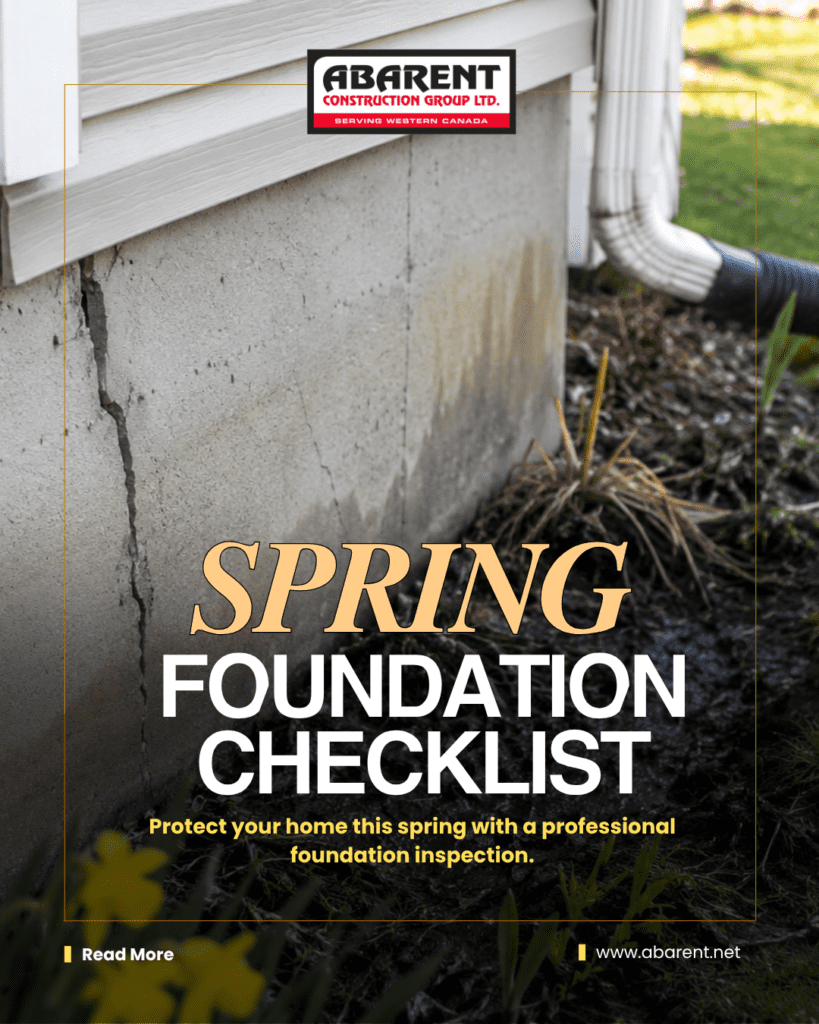
Spring Foundation Checklist: 5 Drainage Fixes in Edmonton

Why March Is the Most Important Month for Foundation Drainage

March is when many foundation problems begin to appear. Snow that accumulated during winter starts melting quickly, and the soil surrounding your home may still be partially frozen. This combination prevents water from draining properly.

When water cannot move away from your home, it can lead to:

  • Basement leaks
  • Foundation cracks
  • Water pooling near the house
  • Mold and moisture issues

Completing a Spring Foundation Checklist early allows homeowners to detect drainage issues before they become serious structural problems. At Abarent Construction, our experienced foundation repair specialists recommend performing a seasonal inspection each March to ensure your home is protected before the heavy spring melt arrives.

Here are five high-impact drainage fixes you should complete before the grass turns green.

1. Clear Snow and Ice Away From Your Foundation

One of the most overlooked steps in a Spring Foundation Checklist is removing snow buildup around the home.

During winter, snow often accumulates along exterior walls. When temperatures rise, that snow melts directly against the foundation. If the soil is still frozen, the water has nowhere to go and may begin seeping into the basement.

Homeowners should:

  • Clear snow 4–5 feet away from the house
  • Break up ice near basement windows
  • Ensure meltwater can flow away from the property

Removing snow early reduces the amount of water pressure against your foundation walls and lowers the risk of needing expensive basement waterproofing or structural repairs later in the season.

2. Inspect Gutters and Extend Downspouts

Your roof drainage system plays a critical role in protecting your foundation. Gutters collect water from your roof and direct it away from the house through downspouts. However, winter ice buildup and debris can block gutters, causing water to overflow directly beside the foundation.

As part of your Spring Foundation Checklist, inspect your gutter system and ensure that:

  • Downspouts extend at least 6–10 feet away from the house
  • Gutters are clear of leaves and debris
  • Water flows properly during snow melt

Poor drainage around the roofline is one of the most common causes of foundation moisture problems. If water consistently pools near your home, professional drainage solutions and foundation repair services may be necessary.

Learn more about professional window well repair provided by Abarent Construction along with other basement waterproofing, weeping tile, and sump pump services to keep your foundation dry and protected.

3. Check the Grading Around Your Home

Proper grading is one of the most important steps in a Spring Foundation Checklist. Over time, soil around your home can shift due to freezing temperatures, snow accumulation, and seasonal moisture. When the ground slopes toward the house instead of away, meltwater can collect near your foundation, increasing the risk of basement leaks and structural issues.

A good Spring Foundation Checklist includes inspecting the slope of your yard:

  • Soil should slope away from the house
  • Water should drain effectively away from the foundation
  • No standing water should appear after snow melt

If water tends to pool near your home, you may need grading adjustments or additional drainage solutions such as a weeping tile system to divert water safely.

Additionally, Natural Resources Canada emphasizes that proper home maintenance and moisture control are key to protecting structural components and preventing long-term damage.

4. Look for Early Signs of Basement Moisture

Another important step in your Spring Foundation Checklist is inspecting your basement interior. Even minor signs of moisture can indicate that water is entering your home from outside, potentially leading to costly damage.

Homeowners should look for:

  • Damp basement walls
  • Musty odors
  • Efflorescence (white residue on concrete walls)
  • Hairline cracks in the foundation

These warning signs often point to poor drainage, groundwater pressure, or structural issues with your foundation. Early detection is critical to prevent minor issues from turning into major foundation repair projects.

If you notice cracks or structural concerns, it’s a good idea to consult a professional Abarent foundation repair specialist. You can also review our detailed guide on repair costs and options here: Foundation Repair Cost in Alberta: 2026 Pricing & Value Guide

Acting early as part of your Spring Foundation Checklist can help protect your basement, maintain your home’s structural integrity, and reduce the need for expensive basement waterproofing or foundation repairs later on.

5. Inspect Your Weeping Tile and Drainage System

Many homes rely on underground drainage systems such as weeping tile to redirect groundwater away from the foundation.

However, these systems can become clogged with soil, sediment, or roots over time. When that happens, water pressure builds up around the foundation walls.

Signs your drainage system may need attention include:

  • Water pooling near the home
  • Basement dampness during spring melt
  • A sump pump that runs constantly
  • Persistent basement humidity

If your home is older, it may be worth evaluating whether your weeping tile system needs cleaning, repair, or replacement. Modern basement waterproofing and drainage systems can significantly reduce water pressure around foundations and help keep basements dry year-round.

Why Preventive Foundation Maintenance Matters

Foundation damage often develops slowly over time. What starts as a small drainage problem can eventually lead to structural cracks or basement flooding.

Following a yearly Spring Foundation Checklist allows homeowners to stay ahead of these issues.

Preventive maintenance can help:

  • Protect the structural integrity of your home
  • Reduce the risk of basement flooding
  • Extend the lifespan of your foundation
  • Maintain property value
  • By taking a few simple steps each March, homeowners can avoid costly foundation repair and waterproofing services later in the year.

Frequently Asked Questions (FAQs) 

When should I complete my spring foundation inspection?

Most experts recommend completing your Spring Foundation Checklist during early to mid-March when temperatures begin fluctuating and snow starts melting.

How far should snow be removed from the foundation?

Snow should be cleared at least 4–5 feet away from the house to prevent meltwater from collecting near the foundation.

Can poor drainage cause foundation cracks?

Yes. When water builds up around your foundation, it creates pressure on concrete walls. Over time, this pressure can lead to cracks and structural damage.

What are common signs of drainage problems?

Common signs include basement moisture, water pooling near the home, mold smells, and foundation cracks.

Final Thoughts: Protect Your Home This March

March may seem quiet for home maintenance, but it is one of the most important times to protect your foundation. Completing a Spring Foundation Checklist helps homeowners prepare for snow melt, improve drainage, and detect early warning signs of foundation damage.

From clearing snow around your home to inspecting gutters, checking grading, and monitoring basement moisture, each step plays a vital role in keeping your home dry and structurally safe. Taking action early can prevent expensive foundation repair or basement waterproofing problems later in the spring.

Protect Your Foundation Before the Spring Melt

If you’re noticing drainage problems, basement moisture, or foundation cracks, it’s best to address them before spring runoff becomes severe. Early action can prevent costly structural damage and protect the long-term stability of your home.

Abarent Construction provides professional foundation repair, drainage solutions, basement waterproofing, and foundation inspections for homeowners across Western Canada. Our experienced team helps identify problems early and recommend the right solutions to keep your foundation strong and dry.

Schedule a professional Foundation Inspection today and make sure your Spring Foundation Checklist is complete before the snow fully melts.

Get Directions for Edmonton and Vancouver 

Call Us: Edmonton: (780) 448-2592 | Vancouver: (604) 362-0119

Connect with Abarent Online:
[ LinkedIn ] [ Pinterest ] [ Facebook ] [ YouTube ] [Instagram

We have had our fair share of unremarkable and even troublesome experiences with other contractors, so you guys were certainly a breath of fresh air. An honest contractor, bang on with the timeline, finished on time, within budget, your “nothing is too much trouble” attitude…and a job well done.

Michael Abbott

I would like to take this opportunity to thank you for a job well done. After this past weekend’s deluge, our basement was left completely dry.

Aileen & Wayne Dembicki

Abarent provided a 3-page, itemized list of the specific work to be done at each stage of the project, including descriptions of optional issues (including additional costs) that might arise during the work. The company president did the initial walk-through for their estimate and later went through it, line by line. He pointed out potential problems and things we had to prepare for during the work (extra cracks, concrete dust, effects on neighbors, etc.)… Repairing a foundation is a very traumatic event for any householder because all of your house investment is (literally!) in the air. If you have to do it, call Abarent. They are professional – we cannot recommend them highly enough.

John Baker

It is terrific to see that your company’s motto of “Quality without Compromise” is more than just words… The job was completed ahead of schedule and the workers ensured that when they left, the yard looked just like it did when they arrive. Well, actually it looked better…

Don and Eve Neil

Call Our Edmonton Foundation Specialists for Your Estimate