
Homeowner Guide: Basement Leaks After Rain
Basement leaks after rain can be stressful for any homeowner, especially when you walk into your basement and discover water where it shouldn’t be. Whether it’s a small puddle, damp walls, or a noticeable leak, water in the basement is a warning sign that shouldn’t be ignored.
Every year, homeowners across Edmonton and surrounding Alberta communities experience basement water problems after periods of heavy rainfall. In many cases, the issue isn’t just the rain itself—it’s how water is being managed around the home.
If you’ve recently found water in your basement after a storm, here’s what you should know and the steps you should take.
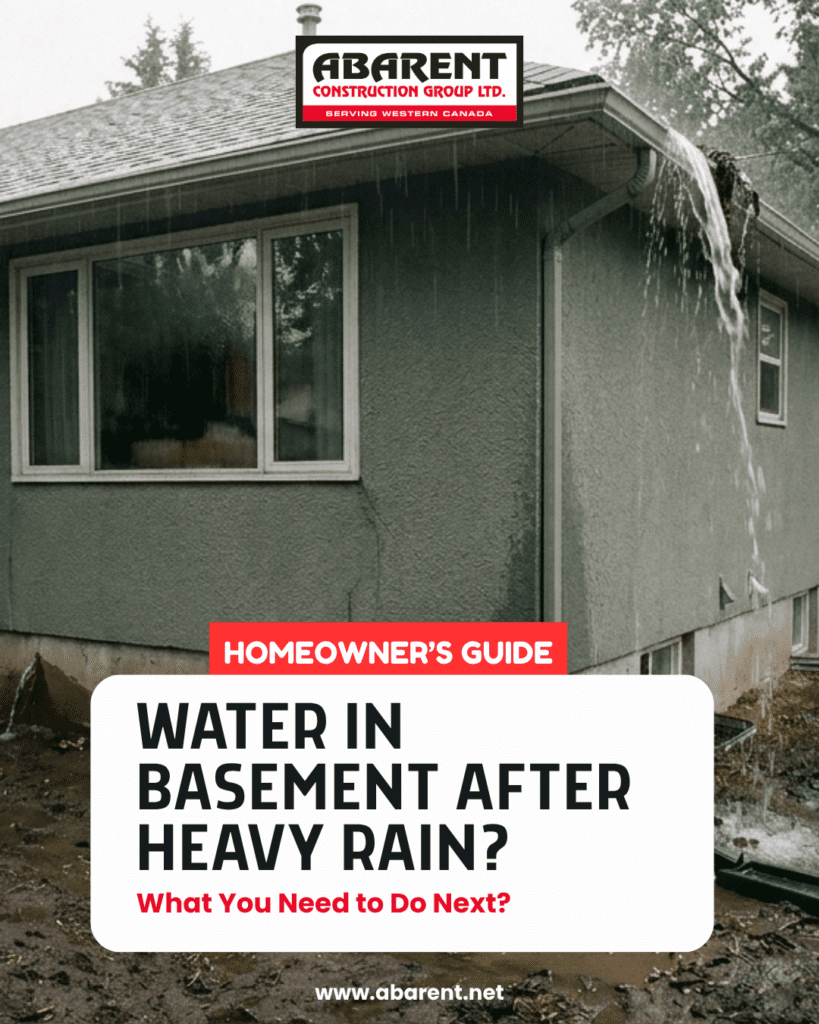
Why Basement Leaks After Rain Happen in Edmonton
When large amounts of rain fall in a short period, basement leaks after rain in Edmonton can occur as the soil around your home becomes saturated. As water builds up around the foundation, pressure increases against basement walls and floor joints.
This pressure can force water through:
- Foundation cracks
- Basement wall joints
- Window wells
- Floor cracks
- Aging waterproofing systems
- Drainage system failures
Even homes that have never experienced water problems before can be affected during periods of prolonged rainfall.
Basement Leaks After Rain: What To Do Immediately
Discovering water in your basement can be alarming, but taking the right steps early can help minimize damage. Basement leaks after rain should always be addressed quickly to reduce the risk of mold, structural damage, and costly repairs.
1. Identify the Source of the Water
Check whether the water appears to be entering through:
- Foundation walls
- Floor cracks
- Basement windows
- Utility penetrations
- Sump pit areas
Understanding where the water is coming from can help determine the cause of the problem.
2. Remove Standing Water Quickly
The longer water remains in your basement, the greater the risk of:
- Mold growth
- Damage to flooring
- Damage to drywall
- Structural deterioration
Remove standing water as soon as it is safe to do so.
3. Move Valuable Items Away From Moisture
If water is affecting storage areas, move furniture, boxes, and personal belongings to a dry location.
4. Document the Damage
Take photos of affected areas caused by basement leaks after rain. This may help with insurance claims and also assist contractors in assessing the situation accurately.
Signs of Basement Leaks After Rain You Shouldn’t Ignore
Many basement leaks are caused by issues outside the home rather than inside.
Poor Property Grading
The ground around your home should slope away from the foundation. If water naturally flows toward the house, it can collect around foundation walls.
Blocked or Damaged Gutters
Overflowing gutters often discharge large amounts of water directly beside the foundation.
Downspouts Too Close to the Foundation
Downspouts should carry water away from the home. When they discharge too close to the foundation, water can quickly accumulate.
Foundation Cracks
Even small cracks can allow water to enter when the surrounding soil becomes saturated.
Aging Waterproofing Systems
Older waterproofing membranes and drainage systems may no longer provide adequate protection during heavy rainfall.
Signs That You May Have a Larger Foundation or Drainage Problem
A single leak after an unusually heavy storm may not always indicate a major issue. However, repeated water intrusion should never be ignored.
Watch for signs such as:
- Recurring basement leaks
- Foundation cracks that continue to grow
- Water stains on basement walls
- Efflorescence (white chalky residue)
- Persistent musty odors
- Mold growth
- Pooling water around the foundation
Learn more in our article: 7 Warning Signs Your Foundation Is Suffering After Rain.
Can Basement Water Problems Be Prevented?
In many cases, yes.
Simple preventative maintenance can significantly reduce the risk of basement water intrusion:
- Clean gutters regularly
- Extend downspouts away from the home
- Maintain proper property grading
- Inspect foundation walls annually
- Address small cracks before they become larger problems
- Schedule routine foundation inspections
Being proactive is often far less expensive than dealing with extensive water damage later.
Why Acting Quickly Matters
Many homeowners assume a small amount of water isn’t a serious problem. Unfortunately, minor leaks often become major repairs when left untreated.
Learn more about repair costs in our article: The Real Cost of Ignoring Foundation Damage
The sooner drainage, waterproofing, or foundation issues are identified, the easier and more affordable they are to correct.
Final Thoughts
Finding water in your basement after heavy rain can be frustrating, but it also provides an opportunity to identify and address potential problems before they become more serious.
If you’ve experienced basement water intrusion, recurring dampness, or signs of foundation moisture, it’s important to investigate the cause rather than simply cleaning up the water and hoping it doesn’t return.
At Abarent Construction, we help homeowners throughout Edmonton identify drainage, waterproofing, and foundation issues before they lead to costly repairs.
Schedule Your Free Foundation & Waterproofing Inspection
Our team can assess your property’s drainage, foundation, and waterproofing systems to help protect your home from future water damage.
Call us today at +1 780-448-2592 or visit www.abarent.net to book your free foundation & waterproofing inspection and keep your basement dry year-round.
Keep your basement dry and your foundation protected all year long.
Connect with us online for tips, updates, and expert advice:
LinkedIn | Pinterest | Facebook | YouTube | Instagram
Don’t wait until a small issue turns into a costly repair—protect your home early and stay ahead of foundation and waterproofing problems.