
New Home Drainage Systems: What Builders Don’t Tell You
Buying a new home is exciting, but many homeowners don’t realize that poorly installed new home drainage systems can lead to serious foundation problems if ignored early. Everything may look clean and perfect on the surface, but hidden drainage issues can quietly develop and turn into costly repairs over time.
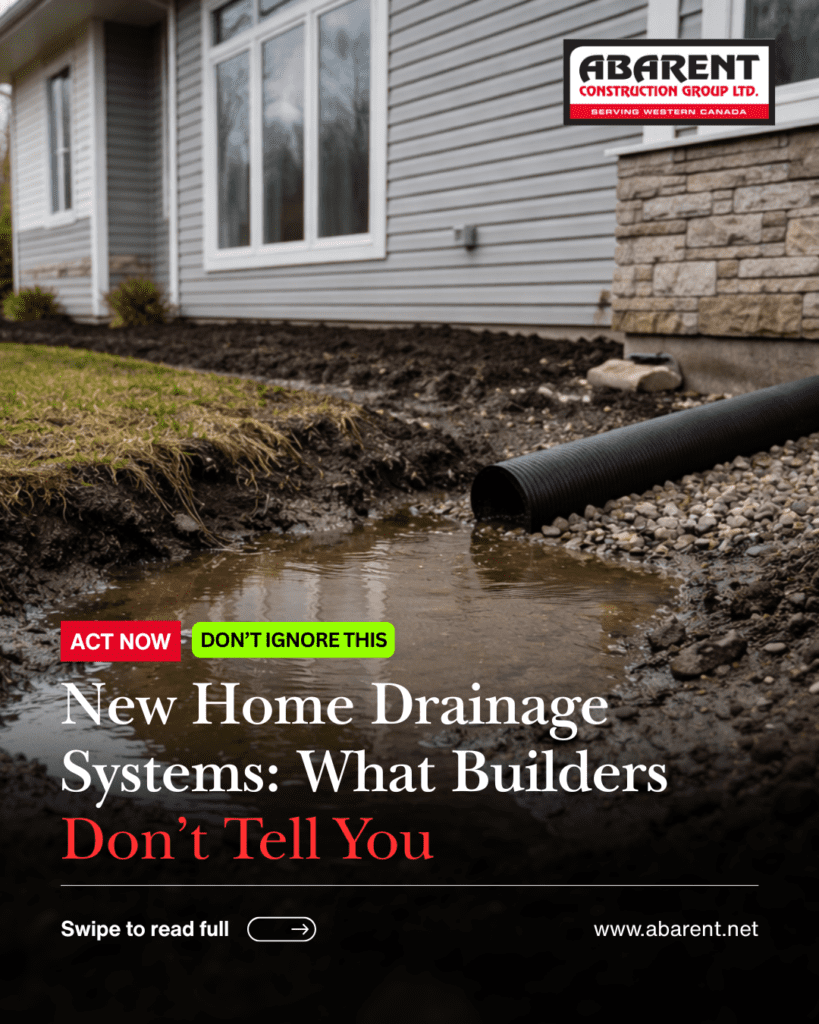
The Truth About New Home Drainage Systems
Most builders install drainage systems that meet minimum code requirements. On paper, everything looks fine—but in real-world conditions, especially with heavy rain and snowmelt, these systems often fall short.
In places like Edmonton and across Western Canada, drainage isn’t just important—it’s critical.
When your drainage system isn’t working properly, water collects around your foundation, increasing pressure on basement walls. Over time, this can lead to:
- Hairline foundation cracks
- Water seepage in the basement
- Soil shifting and settlement
- Long-term structural damage
The biggest problem? These issues don’t always show up right away.
What Builders Usually Don’t Tell You
1. Rough Grading Isn’t Final Grading
After construction, the soil around your home is often loose and unfinished. Builders expect it to settle naturally, but improper grading can direct water toward your home instead of away from it. This is one of the most common causes of drainage failure in new builds.
2. Downspouts Are Often an Afterthought
Many new homes have downspouts that don’t extend far enough. Water discharged too close to the foundation simply flows back into the surrounding soil. Extending downspouts 6–10 feet away can make a significant difference.
3. Soil Settlement Happens Faster Than You Think
New homes are built on recently disturbed soil. Within the first year, the soil settles and creates low spots where water collects. Without correction, your drainage system can start failing almost immediately.
4. Weeping Tile Systems Aren’t Always Enough
Weeping tile systems are designed as a backup, not the primary solution. If too much water reaches them, they can become overwhelmed. Effective drainage should prevent water from reaching your foundation in the first place.
Signs Your New Home Has Drainage Issues
Even in a brand-new home, watch for these warning signs:
- Water pooling near your foundation after rain
- Damp or musty smells in the basement
- Small cracks forming in foundation walls
- Muddy or sinking soil around your home
- Overflowing gutters or short downspouts
Catching these early can save you from expensive repairs later.
Why Drainage Matters More in Spring
Spring is when most drainage problems become visible. Snow melts, the ground becomes saturated, and your drainage system is put to the test.
If your system isn’t working properly, water pressure builds quickly—leading to:
- Basement leaks
- Wall cracks
- Water stains
By the time you notice these signs, damage may already be underway.
How to Protect Your Investment
The good news is that most drainage issues are preventable if you act early.
✔ Improve Grading – Make sure the soil slopes away from your home.
✔ Extend Downspouts – Keep water 6–10 feet away from your foundation.
✔ Monitor Soil Settlement – Fill low spots during the first year.
✔ Keep Gutters Clean – Prevent overflow and water buildup.
✔ Schedule a Professional Inspection – Identify issues before they become costly repairs.
Frequently Asked Questions (FAQ’s)– New Home Drainage Systems
Q1: Why are drainage systems important in a new home?
A: Even brand-new homes can face foundation issues if drainage is poor. Proper drainage prevents water pooling, basement leaks, soil shifting, and structural damage.
Q2: How do I know if my new home drainage system is working?
A: Look for water pooling, damp basement smells, cracks in walls, or overflowing gutters. These are early warning signs of drainage problems.
Q3: What should I check first?
A: Check grading, downspout placement, and soil settlement. Make sure water flows away from your foundation and gutters are clear.
Q4: Can builders guarantee proper drainage?
A: Builders meet minimum code requirements, but that doesn’t always ensure long-term performance. A professional inspection is recommended.
Q5: How often should I inspect my drainage system?
A: Inspect seasonally, especially after heavy rain or snowmelt. Annual professional inspections are also recommended.
Protect Your Home Before It’s Too Late!
Don’t wait for leaks or foundation cracks to appear. Book a professional inspection of your new home drainage systems today and protect your investment before costly damage begins. Contact Abarent Construction Group now!
Final Thoughts
A new home is one of the biggest investments you’ll ever make—but “new” doesn’t always mean safe. Your home is only as strong as the drainage system protecting it.
Understanding how new home drainage systems work—and where they can fail—helps you avoid expensive foundation problems in the future. Taking action today can save you thousands tomorrow.
Helpful Resource
For detailed costs on foundation repair in Alberta, check out our guide: https://www.abarent.net/foundation-repair-cost-alberta-2026/
Contact Abarent Construction Group LTD
Edmonton: (780) 448-2592 | Vancouver: (604) 362-0119
Website: http://www.abarent.net
Connect with us online for tips, updates, and expert advice:
LinkedIn | Pinterest | Facebook | YouTube | Instagram
Don’t wait—protect your home now!