
Spring Drainage in Western Canada: Edmonton vs Vancouver Risks
Spring hits hard across Western Canada—but not in the same way everywhere.
When it comes to spring drainage in Western Canada, the challenges vary more than most homeowners expect. In Edmonton, we deal with rapid snowmelt and frozen ground. In Vancouver, it’s constant rain and saturated soil. Different conditions—but the result is often the same: water finding its way into your basement.
I’ve seen homeowners assume their house is fine just because they’ve never had water before. The reality? Spring is when hidden drainage issues show up fast—and get expensive just as quickly.
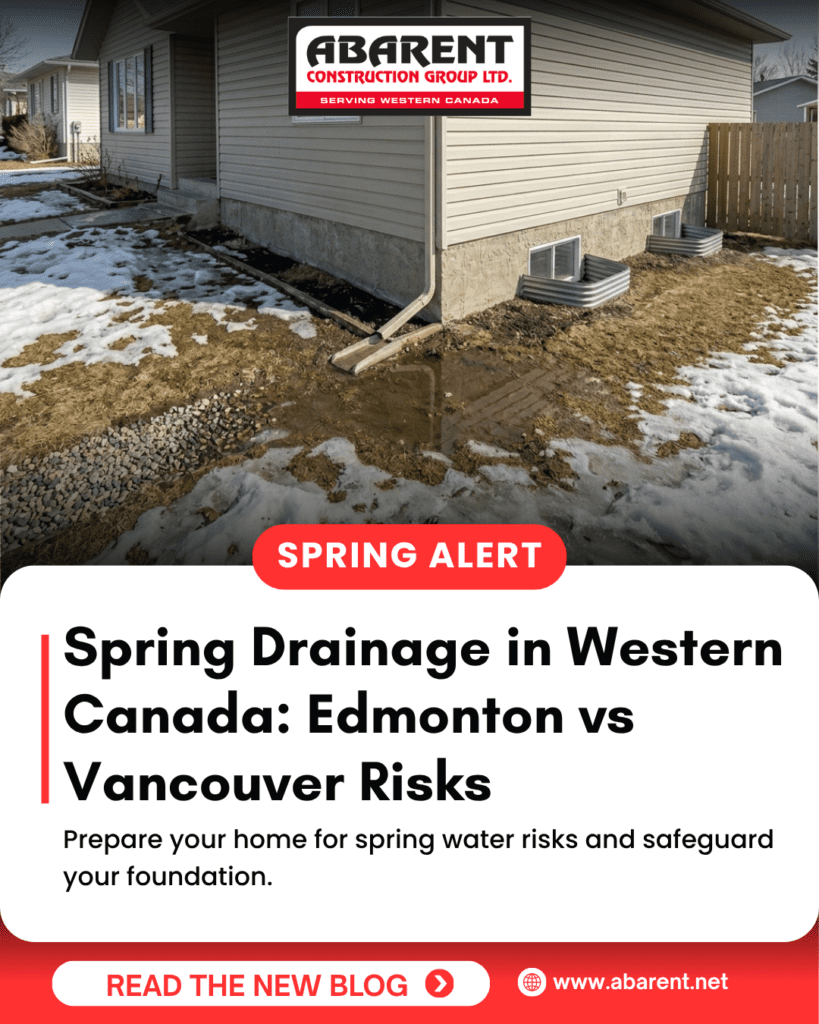
Edmonton Homes: Fast Snowmelt = Sudden Pressure
In Edmonton, the ground stays frozen well into early spring. When temperatures rise, snow melts quickly—but the soil can’t absorb that water.
So where does it go? Straight toward your foundation. This creates hydrostatic pressure, forcing water through:
- Foundation cracks
- Basement walls
- Window wells
- Weak drainage systems
Common Edmonton Spring Problems:
- Sudden basement seepage
- Overflowing or failing weeping tile systems
- Water pooling near foundation walls
Vancouver Homes: Constant Rain = Long-Term Saturation
In Vancouver, the issue isn’t sudden—it’s continuous exposure to moisture. The soil is already wet before spring begins, and ongoing rainfall keeps it that way.
Common Vancouver Spring Problems:
- Slow leaks that go unnoticed
- Persistent dampness in basements
- Increased risk of mold and structural wear
The Hidden Problem Most Homeowners Don’t See
Water damage doesn’t start when you see water. It starts when:
- Soil expands and contracts around your foundation
- Drainage systems begin to clog or fail
- Small cracks start forming from pressure
By the time water shows up inside, the problem has been building for months—or even years.
Where Does All That Water Actually Go?
During spring melt and rainfall, water moves in three main ways:
- Surface Flow – Water running across your yard toward your home
- Soil Saturation – Ground becomes overloaded and holds water
- Hydrostatic Pressure – Water pushes against your foundation walls
If your home doesn’t have proper drainage, all three work against you at the same time.
How to Protect Your Basement This Spring
- Keep Water Away from the Foundation
- Maintain proper grading away from your home
- Extend downspouts at least 5–6 feet
- Check Your Weeping Tile System
- If it’s older than 20–25 years or frequently backs up, it may not be working properly
- Inspect Window Wells
- Clear debris, check gravel, and ensure proper drainage
- Look for Early Warning Signs
- Musty smells, small wall cracks, damp spots, or white efflorescence
Interior vs Exterior Drainage
- Exterior systems: Stop water before it reaches your foundation (long-term solution)
- Interior systems: Manage water after it enters
For Western Canada homes, exterior drainage is critical for long-term protection.
When Should You Take Action?
If you notice:
- Water near your foundation
- Any signs of moisture inside
- Recurring spring issues
Why ‘Wait and See’ Costs More This Spring? Spring water problems don’t fix themselves—they get worse with every thaw and rainfall.
Why Homeowners Across Western Canada Choose Abarent Construction
- Experience with Edmonton’s freeze-thaw cycles and Vancouver’s constant rain
- Solutions built for Canadian soil and climate
- Focus on long-term foundation protection—not temporary fixes
Learn more about our foundation repair services to keep your home safe this spring.
Final Thoughts
Spring drainage in Western Canada isn’t just about weather—it’s about how your home handles water under pressure.
Whether you’re in Edmonton dealing with fast snowmelt or Vancouver facing constant rain, the risk is real.
The earlier you catch drainage issues, the more you save—simple as that.
FAQ: Quick Answers About Spring Drainage
Q1: What is spring drainage?
A: How water from snowmelt and rain moves away from your home to prevent leaks and foundation damage.
Q2: How do Edmonton and Vancouver drainage problems differ?
A: Edmonton faces rapid snowmelt; Vancouver deals with constant rain and saturated soil.
Q3: How can I prevent basement water this spring?
A: Keep grading away from your home, extend downspouts, inspect window wells, and check weeping tiles.
Q4: Interior or exterior drainage—what works best?
A: Exterior systems prevent water before it reaches your foundation; interior systems manage water after it enters.
Q5: When should I call a professional?
A: At the first signs of water, damp spots, musty smells, or recurring spring leaks.
Protect Your Home This Spring
Schedule a professional Foundation Inspection today and complete your Spring Foundation Checklist before the snow fully melts.
Get Directions for Edmonton and Vancouver
Call Us: Edmonton: (780) 448-2592 | Vancouver: (604) 362-0119
Connect with Abarent Online:
[ LinkedIn ] [ Pinterest ] [ Facebook ] [ YouTube ] [Instagram]