
Foundation Cracks: Which Are Serious or Normal in Canada?
Discovering a foundation crack in your home can be alarming. Many Canadian homeowners immediately ask: Is this a normal crack, or is it a sign of serious structural damage?
The truth is — not all foundation cracks are dangerous, but some should never be ignored.
Understanding the difference helps you prevent minor issues from turning into costly repairs. In this guide, we’ll cover the most common types of foundation cracks, what causes them, and when it’s time to call for professional foundation repair services.
Why Foundation Cracks Happen in Canadian Homes?
Foundation cracks form when stress exceeds what concrete can handle. In Canada, the most common causes include:
- Seasonal ground expansion and contraction during winter
- Soil movement caused by moisture changes
- Poor drainage or water pressure behind the foundation
- Improperly placed or mixed concrete
- When the foundation has not been properly engineered for its intended use
During winter, moisture in the soil freezes and expands — a process often referred to as adfreeze. When temperatures rise, the soil contracts again, placing extreme pressure on foundation walls.
This is why February and early spring are peak seasons for foundation crack formation, particularly in cities like Edmonton. For a deeper look at seasonal threats, read our 7 Winter Foundation Risks in Alberta: 2026 Guide.
According to the Canada Mortgage and Housing Corporation (CMHC), regular maintenance can prevent small cracks from turning into serious structural issues.
Foundation Cracks That Are Usually Normal
Not every foundation crack indicates structural failure. Some cracks are part of normal concrete behavior.
Hairline Vertical Cracks
These thin, vertical cracks often appear as concrete cures or during minor settling. They are typically:
- Less than 1/32 inch wide
- Stable over time
- Not associated with significant foundation wall movement
While these cracks may not have any structural concerns, sealing these cracks can help prevent moisture intrusion and future deterioration.
Shrinkage Cracks
Concrete naturally shrinks as it dries, especially in newer homes. Small surface cracks within the first year of construction are often harmless. Even so, they should be monitored, particularly during extreme winter temperature changes.
Foundation Cracks That Should Never Be Ignored
Some foundation cracks signal serious structural stress and require immediate attention.
Horizontal Cracks
Horizontal cracks are one of the most serious warning signs. They are often caused by:
- Excessive soil pressure
- Frost heave
- Poor drainage
- Improper Design
These cracks can indicate bowing foundation walls and are commonly seen during Edmonton foundation repair inspections in winter
Stair-Step Cracks in Block Foundations
Stair-step cracks follow the mortar joints of concrete block or brick foundations. They often indicate uneven settlement or lateral soil pressure. Older homes with block foundations are especially vulnerable.
Wide or Growing Cracks
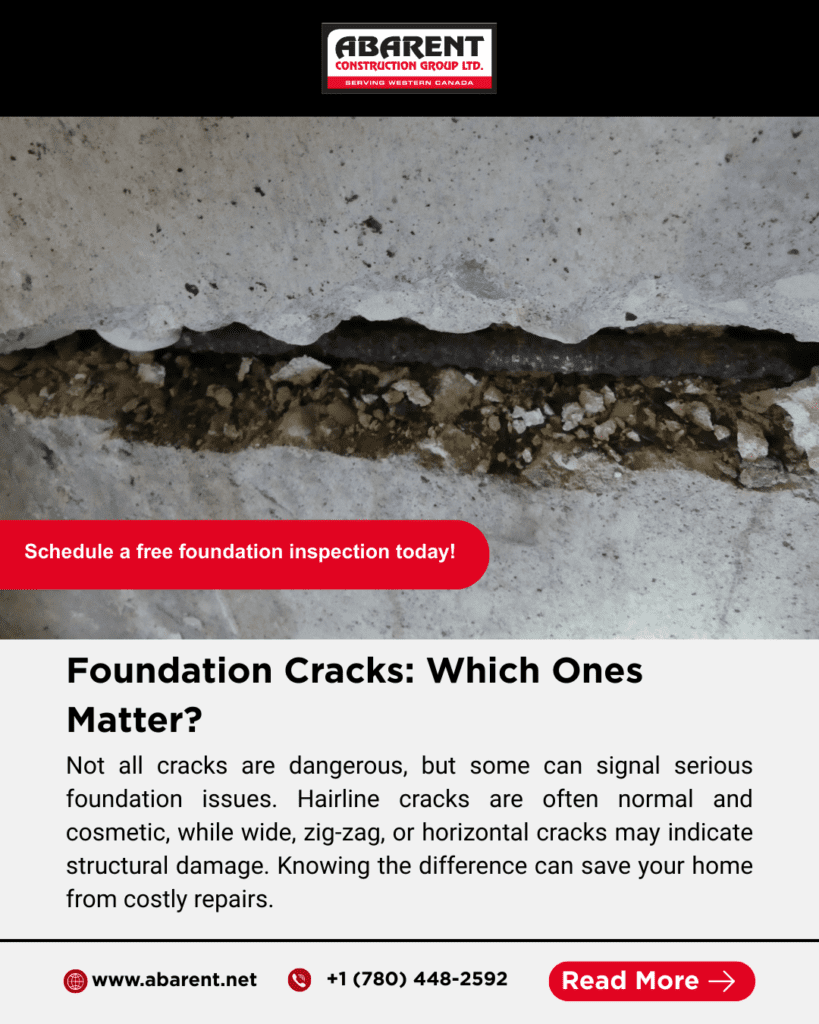
Cracks wider than 1/32 inch, or cracks that continue to grow over time, are serious warning signs of ongoing foundation movement. These types of cracks often indicate deeper structural stress and should never be ignored. A professional assessment with an Experienced Structural Estimator and/or a Structural Engineer can determine whether the damage is cosmetic or requires immediate structural repair.
Why Waiting Can Make Foundation Cracks Worse?
Many homeowners hope cracks will “settle” on their own. Unfortunately, the foundation movement rarely self-corrects.
When the spring thaw arrives, frozen soil releases large volumes of water around the foundation. Cracks that stay dry during winter can suddenly become active leaks. Minor cracks may widen, and structural issues can escalate quickly.
Early action is almost always more affordable and less invasive.
What Homeowners Should Do If They Find a Crack?
If you notice a foundation crack, take the following steps:
- Document the crack – Take clear photos and note its size, direction, and location.
- Monitor changes – Track whether the crack widens or shifts over time.
- Avoid quick DIY fixes – Interior sealants don’t stop external soil pressure or water infiltration.
- Call a professional – A qualified inspection will determine whether the crack is cosmetic or structural.
Homeowners in Edmonton, Vancouver, or Central Alberta can contact Abarent Construction for expert foundation repair services.
Book a Foundation Inspection Today.
Don’t wait for the spring floods to find out your foundation is compromised.
Get Directions for Edmonton and Vancouver OR Visit us @ https://www.abarent.net
Call us: EDMONTON: (780) 448-2592 | VANCOUVER: (604) 362-0119
Connect with Abarent Construction Online:
[ LinkedIn ] [ Pinterest ] [ Facebook ] [ YouTube ] [Instagram]